
I Love Luce
If you’re not advancing, you’re falling behind
By Gary S. Vasilash
Sometimes it is hard for people to see too far beyond not only where they are, but where they have been.
And there is most certainly something to be said for heritage and authenticity, but aren’t we in a place—or at least aren’t Generations Z, Alpha and Beta in a place—where the present moment seems to be the most deserving of one’s attention?
Let’s face it: You are reading this now. Were this piece to have been written in a period (that wasn’t last week) it would have taken some time for it to move from my computer to the screen of yours. But now it is a matter of hitting “Enter.”
Relevance to the individual becomes the driver of attention, and relevance is likely something that, especially now, is in some flux.
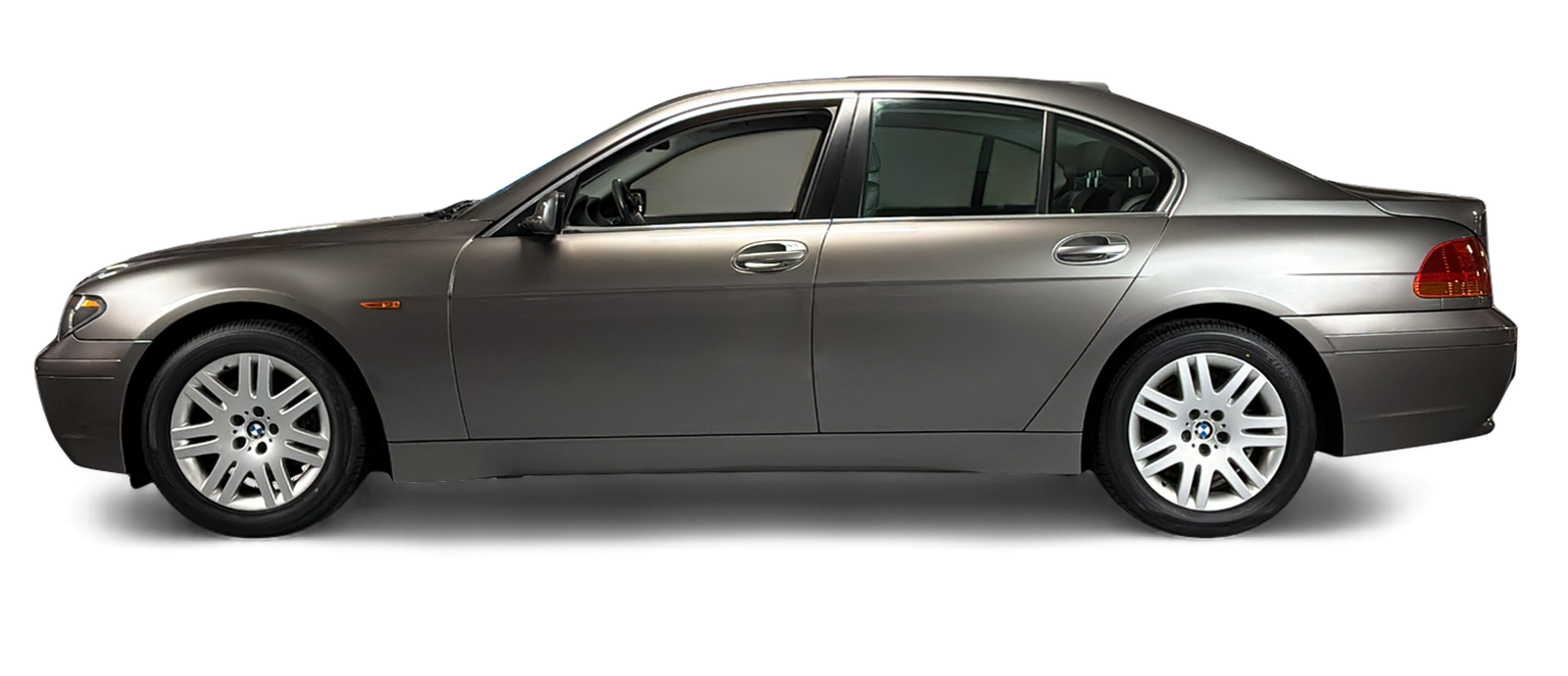
If you look at this car, the 2002 BMW 7 Series, you might shrug:
(Image: BMW)
Yet if you were to look at the very same picture back when it was released, and you were a BMW enthusiast, you would have been likely up in arms.
The car was styled under the direction of Chris Bangle, who became head of BMW Design in October in 1992, having previously been head of Fiat’s Centro Stile.
(It is a fun fact that Bangle is Ohio-born and Wisconsin bred, yet achieved top positions at two of the leading European design facilities.)
While at BMW—a 17-year run (to 2009)—Bangle was responsible for a variety of models: 3 Series, 5 Series, 1 Series, Z3, Z8, Z4, X5, and X3 among them.
Bangle established Chris Bangle Associates following his tenure at BMW: “CBA believes in Ethical Design––both in practice and in form––and also in Truthful Design.”
The firm is based in Clavesana, a small village in northern Italy.
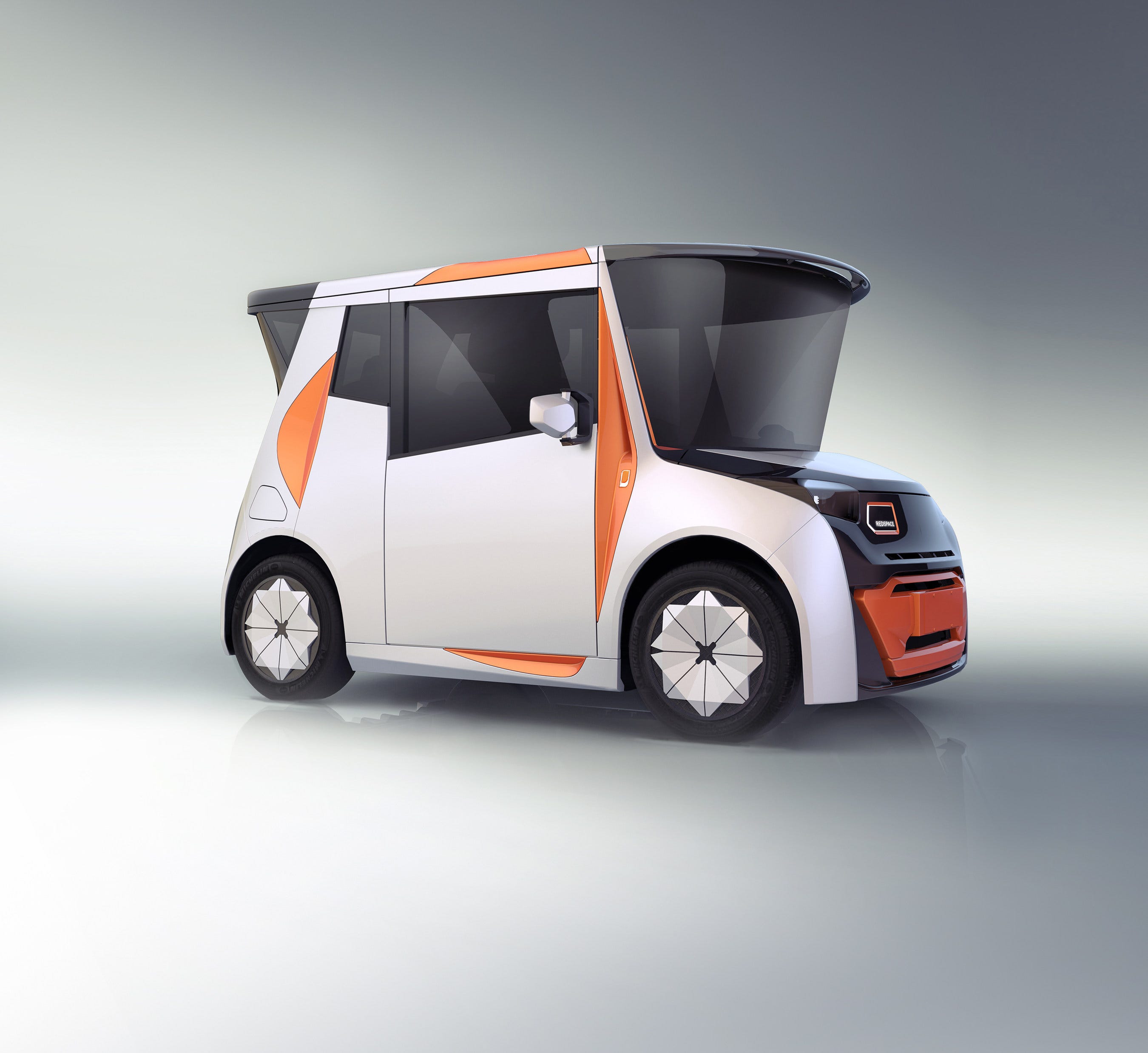
One of the initial projects he worked on was REDS, an electric city car developed for China Hi-Tech Group Corporation. It (“not a concept car, a research program or a design exercise for an indefinite future”) was introduced in the fall of 2017:
(Image: REDS)
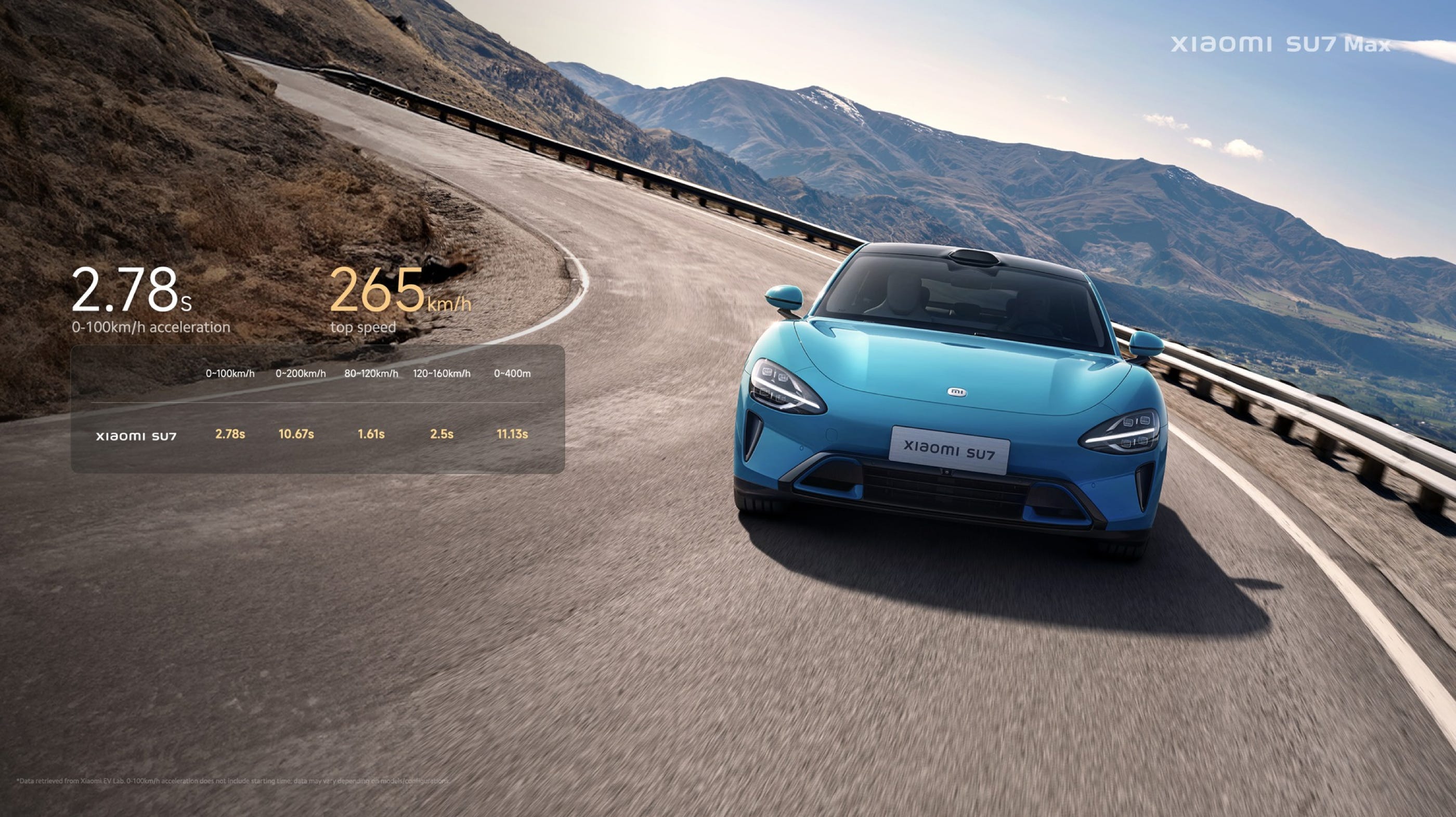
Another design program Bangle participated in was for Xiaomi, the Chinese consumer electronics company that moved into electric vehicles. While Bangle served in a consultancy capacity, Xiaomi had on staff Tianyuan Li, its head of Design, who had worked at BMW and designed the iX electric SUV, and James Qiu, who moved to Xiaomi from Mercedes, where he worked on the Vision EQXX concept car.
The work to develop a design language gave rise to vehicles including the Xiaomi SU7 (the one Ford’s Jim Farley is so taken with):
(Image: Xiaomi)
Strong Emotions
But back to Bangle at BMW.
According to his official biography:
“His mandate to ‘strategize emotion’ through design has energized the typically conservative brand, updating BMW’s classic design with bold, sculptural lines, a far cry from homogenous car design. As a result, his daring designs have helped BMW become the global leader in premium car sales and brought in legions of new fans, spurring rivals to follow suit in emulating this distinctive style.”
And one of those vehicles was the 7 Series.
When it was revealed it was reviled by many people such that there were even on-line petitions to have Bangle fired from BMW.
How dare he!
The critics pointed to things like the blunt appearance of the front end. And the highly controversial rear, which was derisively called the “Bangle Butt.”
Moving On
In 2006 Bangle told MotorTrend:
“The old 7 Series, the E38, was an elegant car, an evolution of the classic BMW look. But it wasn’t penetrating the luxury market as we desired. It just didn’t have the presence to be noticed. At the same time, cars were screaming for change. They were changing--new more powerful motors, way more technology, more speed--they were fundamentally different cars. Put me in one more time, and I ain’t gonna fit, they were almost saying to the designers. Factor in the changing demographics. We knew China and Asia as a whole would be the big growth markets. Our competitors were dominating in these countries in the luxury market. So we needed to do something new. Whenever you move ahead, you leave some people behind.”
BMW did respond by doing a quick midcycle refresh that ameliorated some of the geometric elements of the Bangle Butt.
Still, the controversial 7 Series that Bangle oversaw, the E65, did achieve market success for the brand, and one could argue that because he caused such significant change to happen he unleashed the ability of BMW designers to come up with some stunning designs that are rarely even rivaled by OEMs in the luxury space.
Bangle also said—and remember, this was 20 years ago:
“We as an industry know change is happening, but we don’t seem to be able to deal with it.”
Arguably, the status has remained quo.
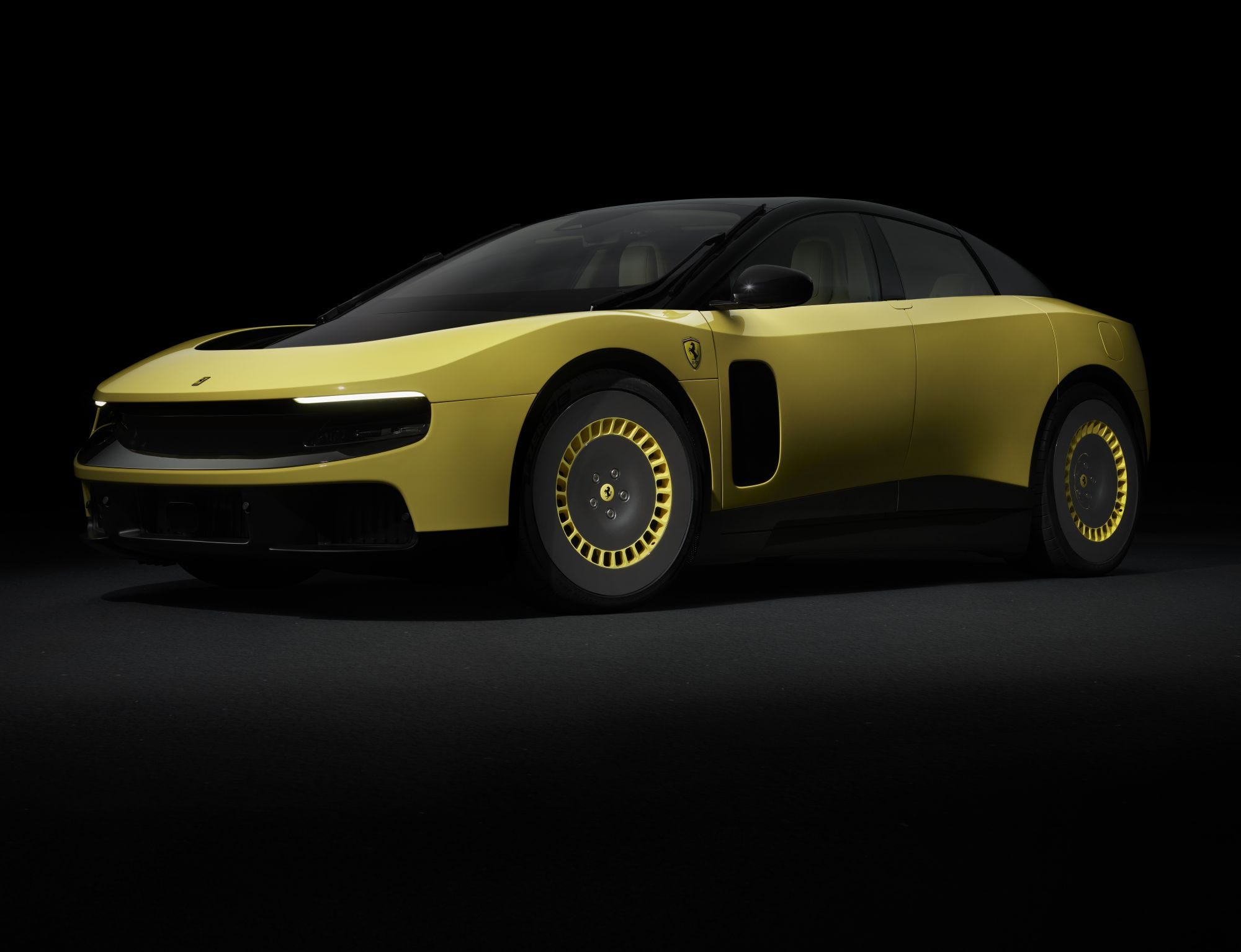
Presently there is consternation and outrage being expressed about the Ferrari Luce.
“It doesn’t look like a Ferrari!”
And perhaps that’s the point.
Going Beyond
The vehicle was executed under the direction of LoveFrom, a design organization founded by Jony Ive, the former head of Design at Apple.
The iMac G3—the computer with an array of transparent colorful shells.
The original iPod.
The original iPhone. (“It doesn’t look like a phone! Where are the buttons?!?”)
The iPad.
The Apple Watch.
These and many more Apple products were released during Ive’s tenure at the company (1992 to 2019).
On the Ferrari Luce project Ive was joined by renowned Australian designer Marc Newson, also part of LoveFrom. Newson has done work for companies including Nike, Louis Vuitton, Qantas, and. . .Ford. He also worked with Ive at Apple.
(Image: Ferrari)
So the exterior doesn’t look like you could cut a finger while running over one of the classic Ferrari creases. The interior has a level of user interface—physical and digital—that is not only unlike anything found in a Ferrari, but unlike anything found in the inside of any other marque’s vehicles, as it was executed by people who don’t concern themselves with “being like Apple” because they were Apple.
Careful With the Figures
In 2022 Ferrari introduced the Purosangue. An SUV. Could there be anything less Ferrari-like?
Yet Ferrari management knew that it would be a success and so committed to not allowing the Purosangue to account for more than 20% of Ferrari’s total sales.
And Ferrari is very conscious of the number of vehicles it produces and sells.
Last year it sold 13,640 vehicles. Globally.
It controls the number so as to maintain the exclusivity of its offerings.
People who think like that, who think the long game, certainly may make mistakes, but it is highly unlikely that the Luce is one of those.
Its ~$640,000 sticker notwithstanding, odds are good that whatever number is produced is the same number that will be sold if for no other reason than it is work that Jony Ive helped execute. That in itself provides value.
Is the Ferrari Luce a big change?
Certainly.
And so was the BMW E65 7 Series.
The folks in Munich had the last laugh.
Those in Maranello are likely to, too.
I did enjoy how you abrogated all responsibility for your commentary in the opening second paragraph. To paraphrase: Gen Z and Alpha, with no retention of things 15 minutes ago, owe little responsibility to what has come before.
Perhaps though just a minor understanding and appreciation for the traditions of design specif to the character of this firm may serve.
Though I did appreciate the Bangle series of comments. He’s the perfect example of what one person said about Vigna’s comment on the Luce, “If you have to justify a design, it’s failed.” Bangle was forever coming up with some analytic philosophy word salad to justify his designs.
Actually you might note that it was Ercole Spada who actually refreshed and modernized BMW designs.
Bangle just put a clown’s nose on them and called it transformative.
The Luce’s analogue-esque interior is nothing more than stale 1970s. The exterior is a formless composite of unrelated misshapen volumes in search of a highlight line.
When the Italians get a design wrong, they really get it wrong. The Luce could be just another bar-of-soap concept from Honda or Dongfeng. That it’s a production Ferrari, and priced at over $600K, speaks to how the industry has fallen into a generic design hole, partly caused by the EV ‘revolution.’ To my eye it joins the horrendous Cybertruck and BMW’s recent Woody the Woodchuck bucked-tooth EVs in the Auto Design Hall of Shame. Which we should expect will grow.